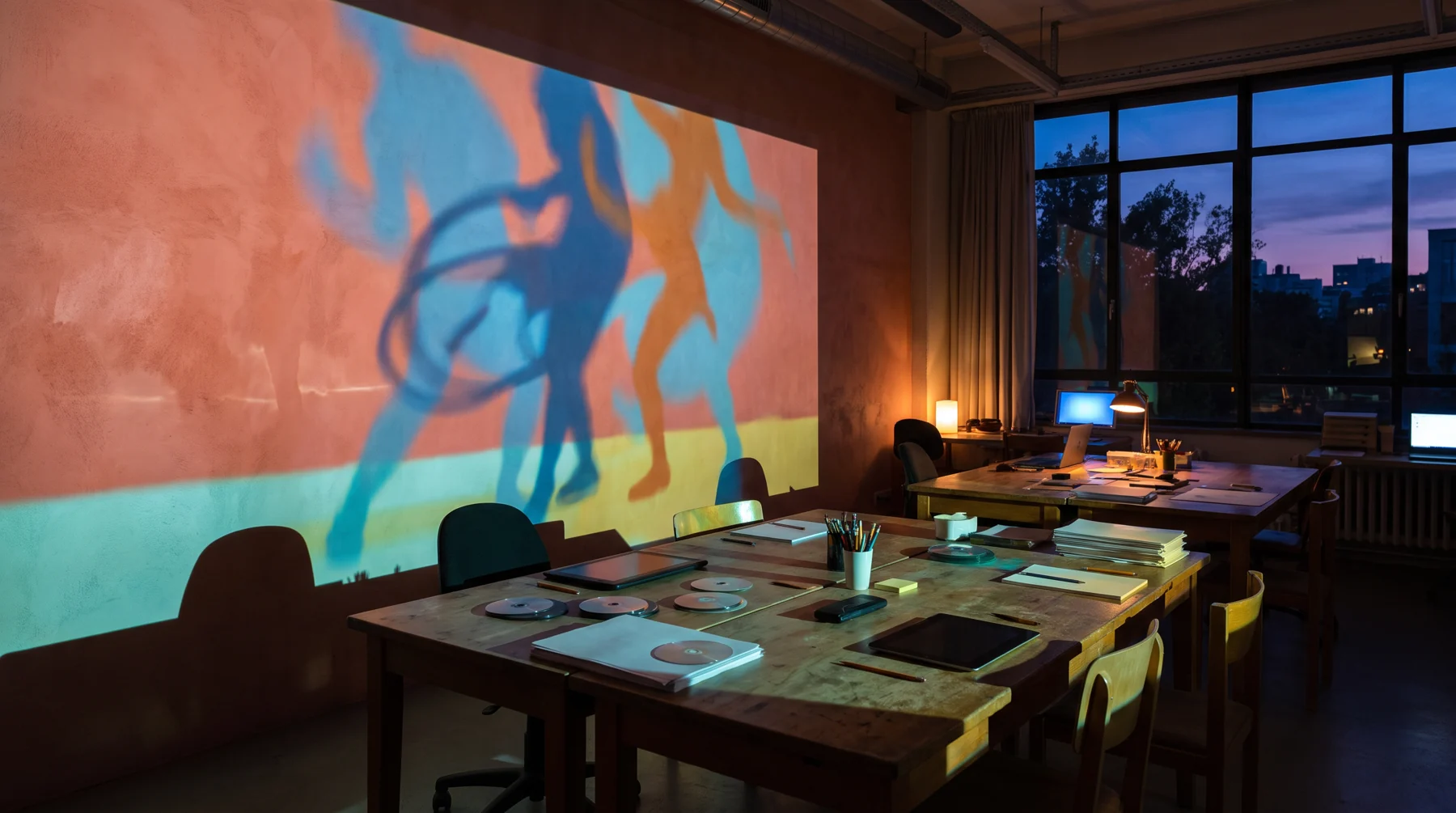
02 / THE PERFORMANCE BAND
CHARACTER ANIMATIONRIGGINGPERFORMANCE
01 / PERFORMANCE FIRST
Give the
character a
reason to move.
Ritomesa is a character animation and rigging workshop for projects that need a performance to remain clear while it moves. We connect intention, posing, rhythm and controls so a character can carry an action—not simply travel across a screen.
Share a motion note
Not just a pose.
Intention
What does the character want, resist, notice or protect in this specific beat?
Weight
Where does the body settle, hesitate, commit or recover while the decision plays out?
Rhythm
What timing lets another person read the change without having it explained?
03 / POSE TABLE
Make the
first frame say
something.
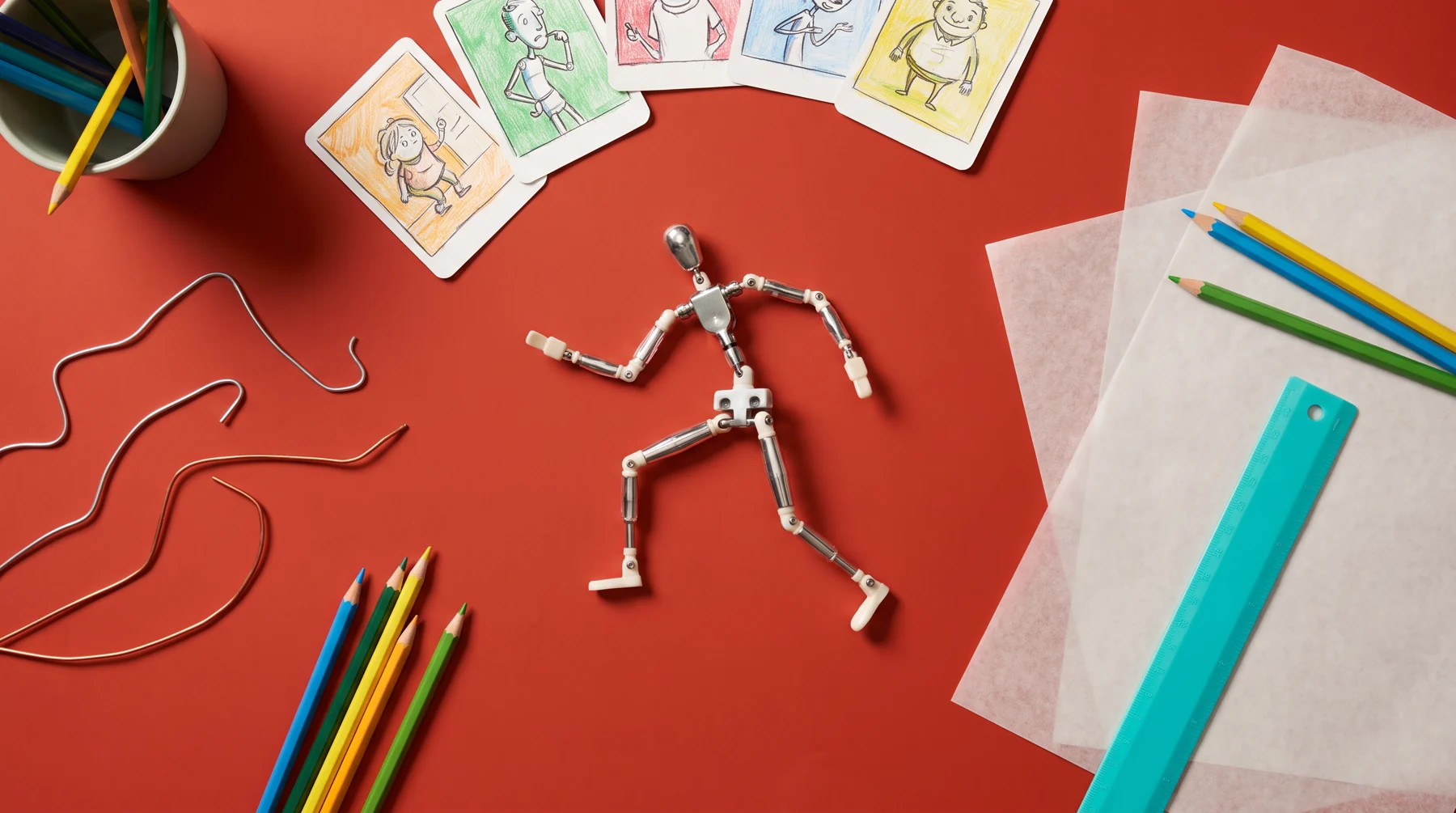
Before an action becomes a sequence, the starting pose can establish a question: direction, attention, pressure, balance or relationship. It is not a frozen illustration; it is an agreement about what the next movement needs to answer.
Enter the workroom04 / ARC CONSOLE
Choose an arc
for the action.
Select a performance lens to change the work prompt. Each lens is a way to examine a move, not a universal recipe.
CURRENT MOTION NOTE
A movement that discovers its own balance
Discovery asks how a character tests the space, finds a centre of gravity or lets a thought arrive through the body. The rig needs enough responsiveness for the animator to search rather than merely execute.
05 / CHARACTER DUET
Let a rig
support the
performance.
A rig is not only a collection of controls. It is an interface between an animator’s decision and a character’s behaviour. Useful controls are named, discoverable and shaped around the range of performance the project needs.

06 / JOINT SHELF
Keep the
mechanism near
the meaning.
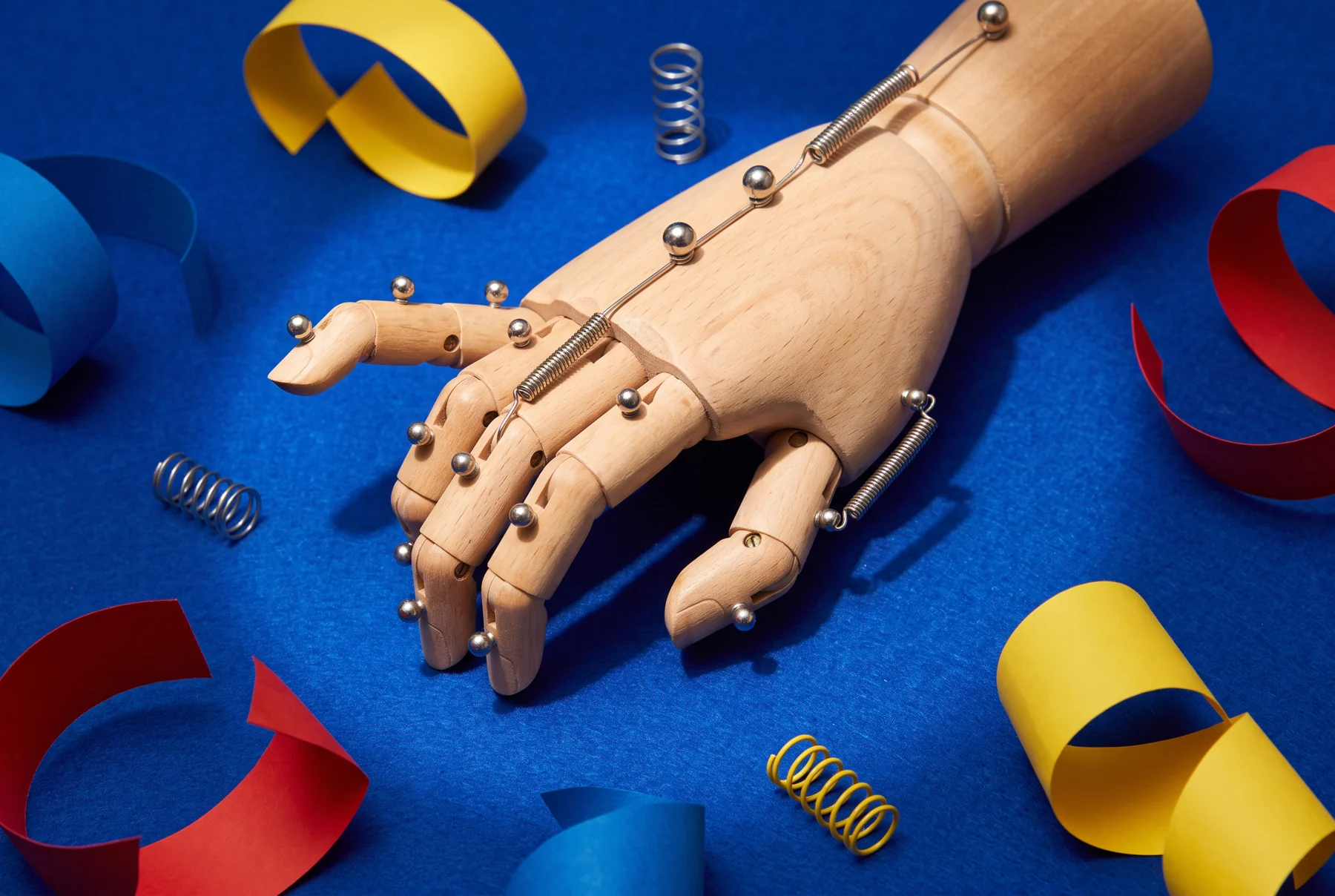
Joint placement, deformation, space switching, constraints and automation can be discussed in relation to the performance they enable. The most complicated mechanism is not automatically the most expressive one.
07 / LINE STUDY
Look for the
movement between
the key moments.
Breakdowns and in-betweens are where an intention becomes specific. A useful pass asks not only whether the character gets from A to B, but what changes in the body, face and timing while that happens.

08 / WORKSHOP RAIL
Give the shot
room to become
specific.
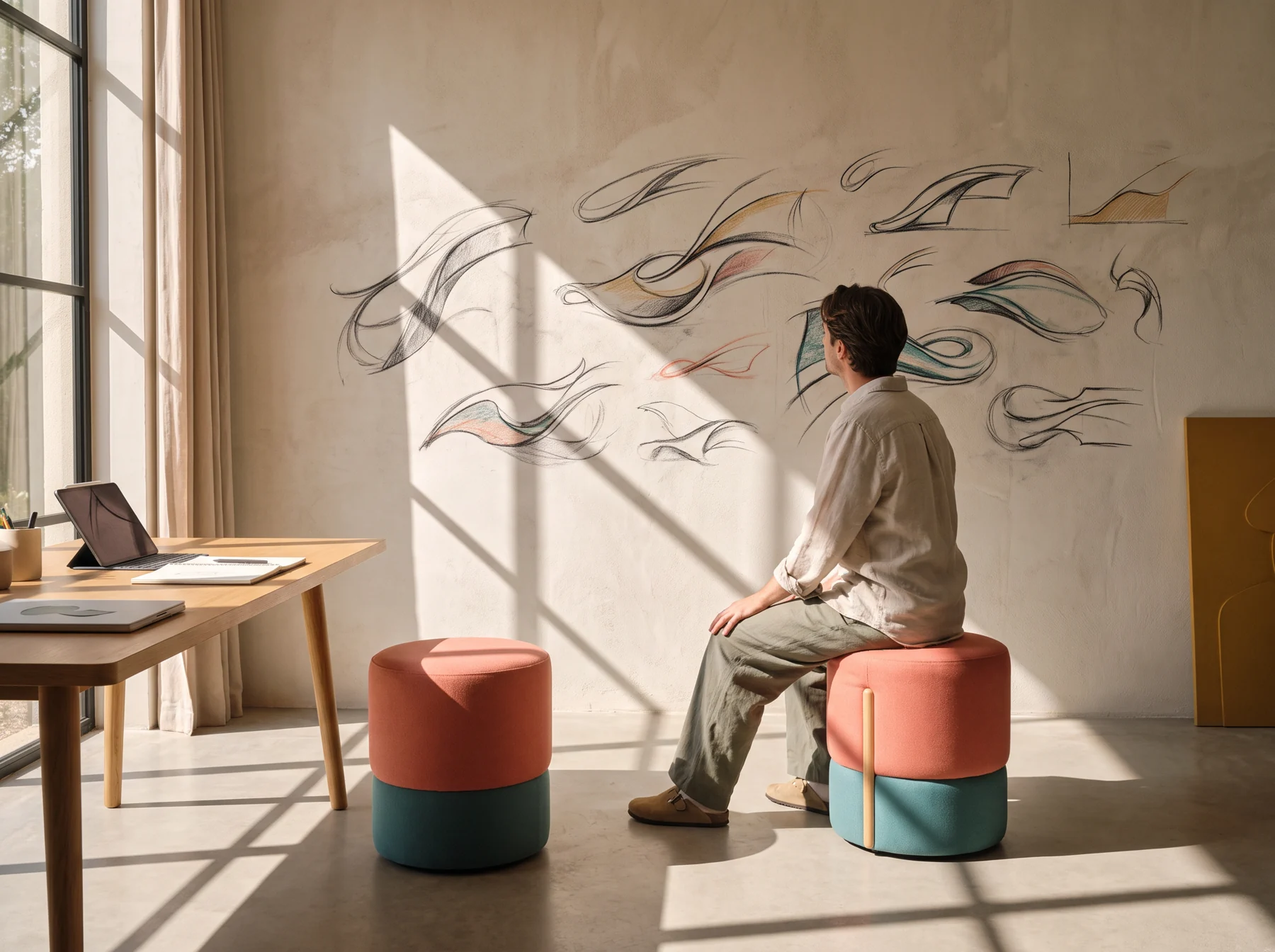
Character work may include movement reference, performance planning, rig review, blocking, polish, handover notes and collaboration with other disciplines. The appropriate scope follows the scene and production context.
09 / MOTION METER
Set the pass
to the right
question.
Move the marker to focus a review. This is a conversation prompt, not a rating of the work or a guarantee about delivery.
PoseRhythmPolish
Look at timing, holds and release. The goal is not uniformly smooth motion; it is a rhythm that makes the character’s changing thought or effort legible.
10 / CRAFT SQUARES
Small controls
can carry big
choices.
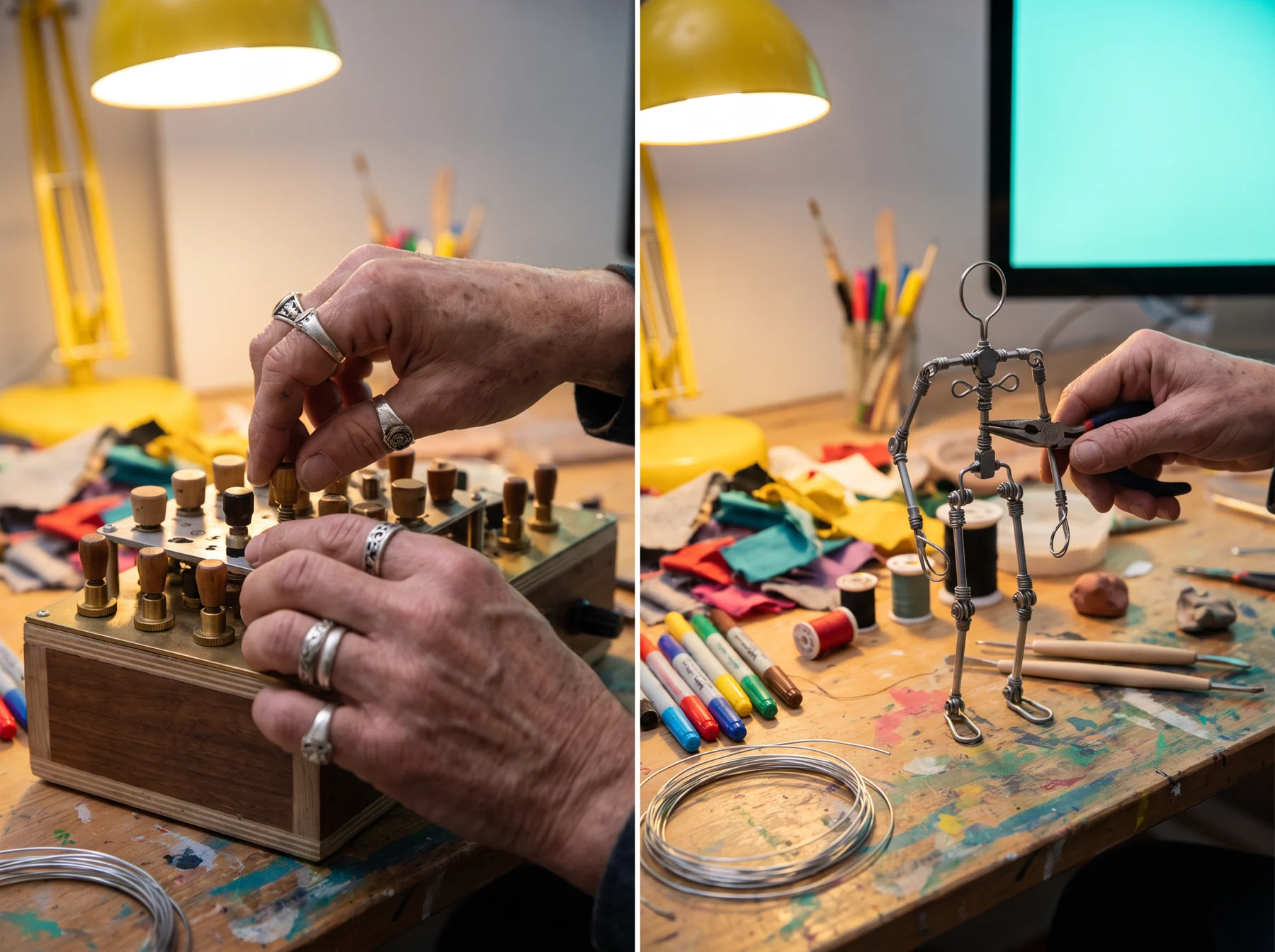
Controls, naming, limits, default states and notes are part of the animator’s experience. A technical decision is more useful when it acknowledges the person who needs to make a performance with it.
11 / QUESTIONS IN MOTION
Before the next
shot, ask a
clearer question.
These answers describe the public practice and its boundaries. Any paid work, if appropriate, is confirmed separately in writing.
An engagement may include performance and scene discovery, animation planning, rig review or construction, blocking, polish, handover notes and collaboration support. Scope depends on the project question, production context and materials available. Ritomesa does not promise a particular audience response, production outcome or delivery result.
Yes, when the starting point is a bounded shot, performance need, control issue or handover condition. A first conversation can clarify available materials, production constraints and whether the question suits the practice. It is not a promise to repair, certify, replace or publish an existing production asset.
Do not send private source files, confidential scripts, production credentials, unreleased material, personal records, payment details or other sensitive information through the public form. A concise non-confidential description of the character, scene condition and question is enough to begin an appropriate conversation.
No. This website does not accept payments, reserve capacity or create a production agreement. If further work is suitable, scope, access, responsibilities, fees, acceptance, cancellation and any relevant rights should be described in a separate written agreement.
12 / MOTION NOTE
Bring the
moment that needs
to move.
Share a short non-confidential description of the character or performance question. This demonstration form does not send messages or create a production agreement.